JOIN/LOGIN
An Open Letter to the USAFL Community
To the players, coaches, and all who support the Revolution,
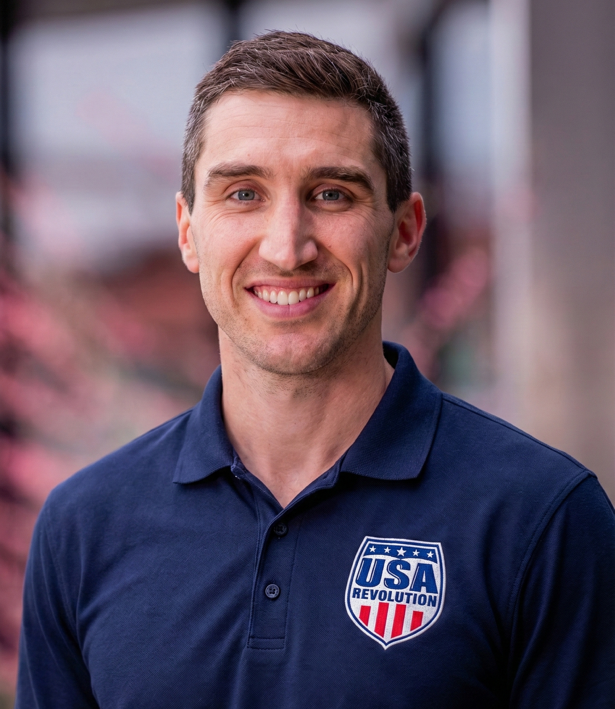
It is an honour to step into the role of Head Coach for the Men’s Revolution program. We have a
tremendous amount of talent across this country, and my mission is simple: To ensure the
Revolution represents the absolute best of American Australian Football.
As we look ahead, I want to bring total clarity to how we will approach selection and
development. Historically, the pathway into the national team hasn’t always felt clear, and in my
early discussions with players I have heard loud and clear that we need to make sure all players
understand our requirements to play for the Revolution. My goal is to simplify the pathway so
every player knows exactly where they stand and how to progress. And to do so, we will move
away from a participation-based model and toward a high-performance selection model,
while maintaining a structured development program and pathway to the flagship team.
A Clearer Structure: Two Tiers, One Goal
To support both elite performance and long‑term growth, we are organizing the men’s program
into two connected tiers.
- The Revolution (Tier One) – National Representative Side
This is our top national side, representing the highest standard of play in the country.- ● Selection Based on Performance: Selection for the Revolution will focus on the best
talent we have available and on merit. We are watching your club games, talking with
regional leaders, and reviewing your impact at Nationals.
● The Elite Standard: If you are among the best 24-30 players in America, you are a
Revolution player. While availability and positional balance always factor into final
squads, the foundation is simple: we want the best talent on the field for internationals,
friendlies, and exhibition matches.
- ● Selection Based on Performance: Selection for the Revolution will focus on the best
- The Revolution Development Squad (Tier Two)
This is our program’s engine room – a dedicated pipeline into the senior side.- ● A Coached Environment: This is not a “reserve” team. It is a structured development
program with coaching, feedback, and resources designed to bridge the gap between
club footy and international standards.
● The Pipeline: This tier is for the best and most promising club talent, aspiring to get
selected to the Revolution, to showcase what they have to offer.
- ● A Coached Environment: This is not a “reserve” team. It is a structured development
An Adjustment to how we view in-season camps.
Camps are now a resource for development and connection. They are the primary environment
where we build relationships, focus on individual skill-building, and equip our Development
Squad with the tools to take the next step. For our Tier 1 players, these camps are a resource,
not a requirement. For the Development Tier, these camps are the focal point of the program
and are strongly encouraged.
What’s Next?
We have an exciting month ahead, with our regional development camp to take place in St
Louis on May 2nd. I want to thank our development coach Rich Lozano for the work he and the
St Louis football club have already invested in making this a great weekend for our Revo &
Freedom players.
Selection discussions for our upcoming game against Canada on August 29th are underway.
My coaching staff and I will continue connecting with regional leaders and clubs throughout the
season. We intend to announce our squad of 30 on May 15th.
I cannot wait to take this step forward. Together, we will deliver the best football product this
country has to offer while continuing to invest in the future of our Revos.
Stef Barr Head Coach, USAFL Men’s Program
The International Program (IP) houses the men’s (Revolution and Development, “Revo” and “Devo”) and women’s (Freedom and Liberty) teams. The men’s and women’s teams share the same league structure, but the scale and depth within that structure function differently for each team. On the men’s side, there are more clubs, more games, more players, and more opportunities for athletes to be seen in high performance environments. That volume gives the coaching staff and IP leadership enough visibility and performance data to select the senior team primarily on demonstrated form. Because of that, the men’s team is trialing an approach that operates more like a traditional representative side: Tier 1 players are selected on performance, while camp serves as a development and preparation resource. A defined pathway remains in place for emerging talent, including competitive playing opportunities, and as the women’s league grows, we expect to evolve toward this same model. A future maturation step may even include age based development squads such as U17 and U21 teams.
For the women, the same league structure produces different realities. With fewer clubs, fewer games, fewer players, and fewer chances to be evaluated across the season, it is more challenging to rely on league play alone for selection and cohesion. The national team player pool is smaller, and the top 25-30 players have fewer natural opportunities to play together or against comparable competition. Because of this, the women’s team continues to benefit from a senior plus reserve structure, where camp plays a central role in evaluation, cohesion, and whole roster preparation. This reflects the current scale and depth of the women’s league, not a philosophical difference in standards.
Head coaches also bring different approaches to development and selection, which shapes the purpose of camp in each of the men’s and women’s squads. The men’s approach emphasizes representative selection supported by a development pathway; the women’s approach emphasizes list depth, cohesion, and centralized preparation. Both are aligned with the needs of their respective player bases.
It is a nuanced difference, but an intentional one. Both teams operate under the same high performance standards and are supported jointly, while each receives the structure it needs to address its current constraints and continue progressing toward long term parity.
Q&A: Why Do the Men’s and Women’s Programs Use Different Approaches to Camp?
Q: If the men’s and women’s teams play on the same weekend, why don’t they have the same camp requirements?
Because the same league structure functions differently for each. The men’s side has more clubs, more games, more players, and more chances for athletes to be seen throughout the season. That scale and depth give the coaching staff enough performance data to select the senior team primarily on demonstrated form. Camp can therefore serve as a development and preparation resource rather than a requirement for Tier 1 players.
Q: What makes the women’s situation different?
The women’s league has fewer clubs, fewer games, fewer players, and fewer natural opportunities for the top 25-30 athletes to be evaluated or to play together. That makes it more challenging to rely on league play alone for selection and cohesion. Camp remains a central environment for evaluation, list management, and whole roster preparation.
Q: Is this a philosophical difference between the programs?
No. Both squads operate under the same high performance standards. The difference is structural: the same league framework produces different realities because of scale, depth, and visibility.
Q: Why say the men’s model is closer to a “representative structure“?
Because the men’s senior team can be selected largely on performance observed across the season-similar to how mature representative teams operate. Camp supports development and preparation, while a defined pathway continues to identify emerging talent.
Q: Will the women eventually move toward the same model?
Possibly, yes. The men’s team will trial this approach, and with success and validation, will look to expand. As the women’s league grows in size, depth, and visibility, the program can evolve toward a similar representative structure. The Freedom will actively support league growth as is possible under the IP’s purview. Future steps may include age based development squads such as U17 and U21 teams.
Q: Do coaching styles play a role?
Yes. Head coaches bring different approaches to development and selection, which shapes the purpose of camp. The men’s approach emphasizes performance based selection supported by a development pathway; the women’s approach emphasizes list depth, cohesion, and centralized preparation.
Q: Is this difference intentional? Yes. Both programs are supported jointly and held to the same standards, but each receives the structure it needs to address its current constraints and continue progressing toward long term parity.